

Start here · $10
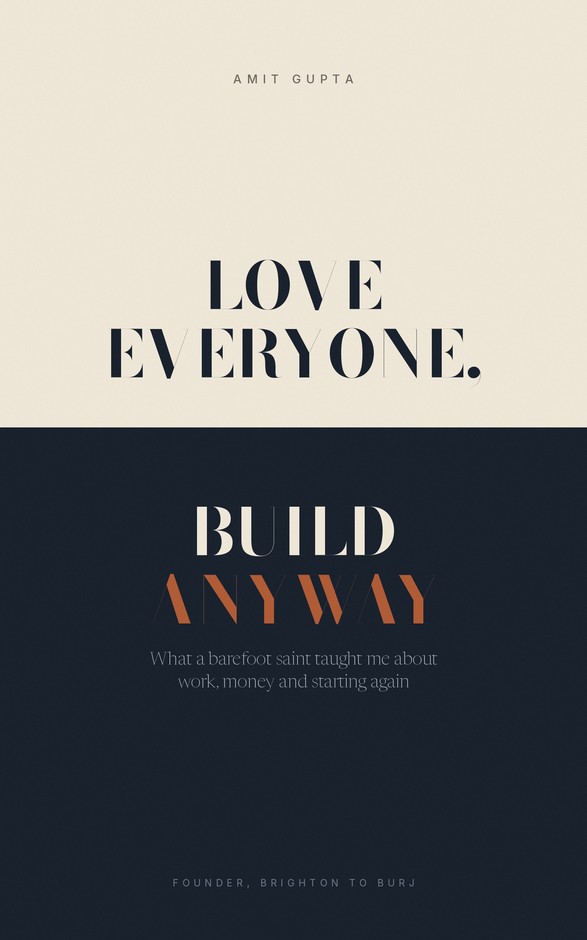
Love Everyone,
Build Anyway
What a barefoot saint taught me about work, money and starting again.
In 2017 my business collapsed. We packed the house, flew to India, and started over with nothing. This is what I found on the way back.
Ten chapters, 138 pages, ten dollars. It will tell you quickly whether the rest of this is for you.
$10
PDF & ePub · 138 pages · instant download
PERSONAL READINGS
Your patterns, written out by hand.
Not astrology. I am not a trained astrologer and will not pretend to be. What I am is someone who has built companies for fifteen years and found that certain very old frameworks describe people better than most business writing does.
The Soul & Saar reading is sixty-six pages, prepared by hand, covering how you decide, where you overreach, your instinct with money, how you are to work for — and the twelve months ahead.
About half of it is business. The other half is personal, because in practice they are the same behaviours in different rooms.
PREPARED BY HAND
How it works
No template, no software output.
01
Order, then send your details and what you want looked at02
I sit with it and write it up over several sittings03
Your reading arrives within ten working days04
If you want it walked through, add a sessionGuidance
Work with me directly
Two ways to work with Soul & Saar, depending on whether you want to do the work or talk it through.
$97
The Four Weeks
The book, a 39-page workbook, a private group and thirty minutes one to one. Twenty exercises on money, ego, family and practice.
$250
One-to-One
Sixty minutes on the thing you are actually stuck on. Work, money, a decision you are avoiding, or what it is costing you at home.
JOURNEYS
Three nights in the Kumaon hills
MARCH 2027
3 NIGHTS
12 PLACES
DELHI RETURN
Membership · $7 a month
The Letters
One members-only essay a month, one worked example with the details left in, and three questions answered properly in writing.
And 15% off everything else here, permanently — which means one reading pays for two years of membership.
Members pay
15% less
On every reading and every session, for as long as you stay.